Our first newsletter is now out. The newsletter is designed
to be essential reading for all inhouse
brand lawyers, providing
news, case updates and events in
the United Kingdom. This month, we
address 3D shapes and the latest
instalment in the Slush Puppie Wars.
Tag: Ronix
-

Brand Interchange
-

De Longhi v Ronix
Court: Appointed Person
Judge: Emma Himsworth KC
Judgment: Here
Trade Mark: UK00003740463 (CHEFCHY)
Issue: Trade Mark Invalidity
Summary
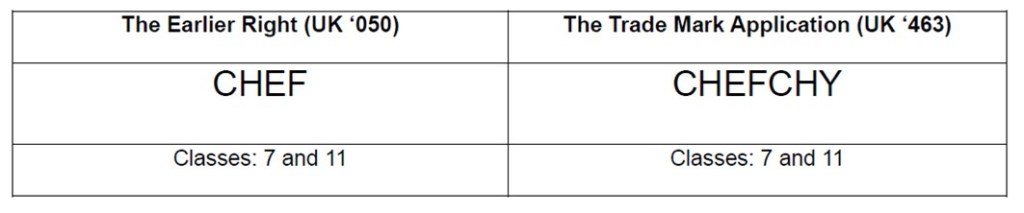
In De Longhi v. Ronix, the Appointed Person has upheld the Hearing Officer’s decision that Ronix’s application UK ‘463 for CHEFCHY in classes 7 and 11 was valid over De Longhi’s earlier mark, UK3438050, for CHEF in the same classes.
Opposition
De Longhi opposed the registration on the basis of ss. 5(2)(b), 5(3) and 5(4)(a) (passing off) of the Trade Marks Act 1994.
The Hearing Officer found for Ronix, concluding as follows:
- Reputation and distinctiveness: The Hearing Officer found that UK ‘050 had a moderate reputation in the UK for food mixers and their attachments. However, its distinctiveness was no more than a medium level overall.
- Similarity between the marks: The Hearing Officer concluded that there was a moderate degree of similarity between the competing marks overall.
- Similarity of goods: The Hearing Officer found that the goods for which UK ‘050 was registered, such as electric kitchen tools and utensils, were similar to a medium to high degree to the goods for UK ‘463, such as food mixers and their attachments.
- Overall: Taken together the differences between the marks, such as the additional letters “CHY” in the contested mark, were sufficient for the average consumer to distinguish between them and avoid confusion.
- Section 5(3) and 5(4)(a): The Hearing Officer dismissed De Longhi’s claims under these sections, finding no evidence of unfair advantage, detriment, or passing off.
The Appointed Person
The opponent appealed the Hearing Officer’s decision on several grounds:
- Errors in the Assessment of Reputation and Distinctiveness: The opponent claimed that the Hearing Officer overlooked certain evidence and should have found a higher degree of acquired distinctiveness for their earlier mark.
- Errors in the Assessment of Similarity of Goods: The opponent argued that the Hearing Officer should have found the goods to be identical or highly similar, rather than just similar to a medium to high degree.
- Errors in the Assessment of Likelihood of Confusion: The opponent contended that the Hearing Officer made errors in assessing the likelihood of confusion between the marks.
- Errors in the Assessment of Section 5(3) and 5(4)(a): The opponent maintained that the Hearing Officer should have considered unfair advantage, detriment, and passing off.
The Appointed Person reviewed the decision and found no material error in the Hearing Officer’s assessment, dismissing the appeal and upholding the Hearing Officer’s decision.
 Brand Interchange